Signs the tree has to come out
Most calls start with big pieces dropping without warning, a deep crack in the trunk, a canopy thinning on one side, or soil lifting around the base. Any one of these can be managed for a while. Two or three together usually mean the tree is past what trimming can fix.
What multi-day rain does to a tree
After several days of tropical rain the ground is saturated, and a tree with a lean or weak roots is the one that shifts. We look at how far the base has moved and whether the trunk has started to twist. From that we decide whether taking out a few limbs buys you time or the whole tree should come down before the next system.
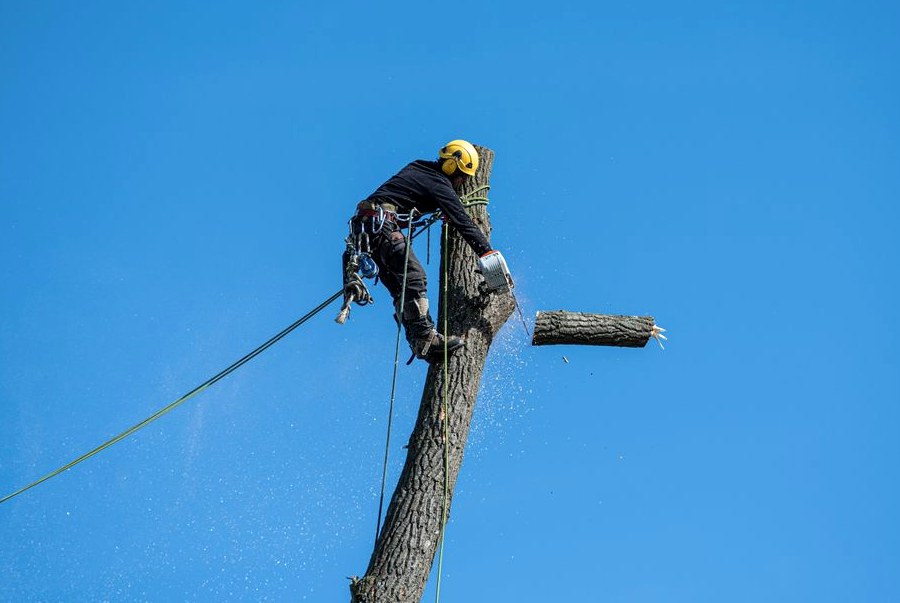
How we take the tree down
Large limbs come off in three cuts. First an underside cut about one-third of the way through, then a top cut just beyond it, then the final cut at the branch collar or a selected lateral. We work the tree down in sections this way, which keeps each piece manageable when the tree stands close to the house.
Equipment and what happens to the trees left standing
The aerial lift gets us to the upper limbs, and everyone in the work area wears a hard hat. If other trees on the lot need work while we're there, we cut whole branches just outside the branch collar, never flush to the trunk. Where a branch needs shortening instead of removal, we cut back to a lateral at least one-third the diameter of the piece we're taking off.
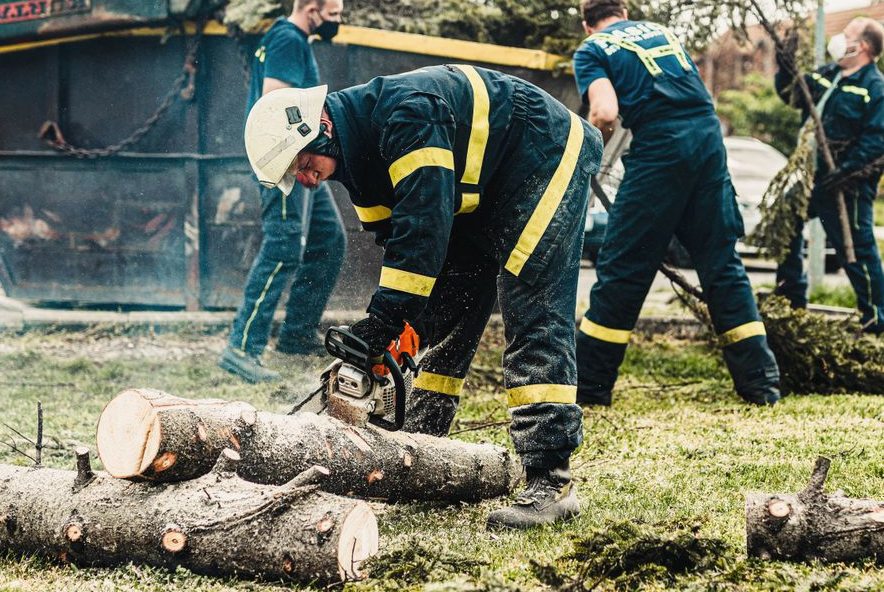
Inside the Job
A visual look at what the service involves.

From First Call to Finished Job
-
Reach Out
Tell us what you need done and when, you'll get a straight answer, not a sales pitch.
-
We Walk the Job
We size up the work in person, access, scope, and timing, so the quote is real, not a guess.
-
Written Quote
We put the work, the timeline, and the number on paper, take your time with it.
-
The Job, Done Right
We do the job right the first time, clean up after ourselves, and stand behind the work.
Depending on what we find, that can mean:
- Where a tree cannot be safely felled in one piece, dismantle it from the top down and use rigging to control the descent of sections.
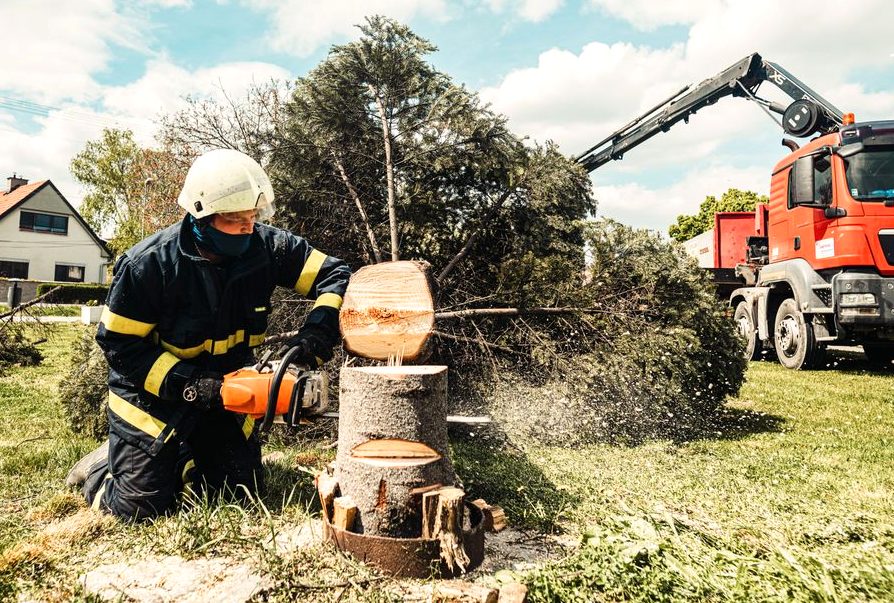
- After removal, chip brush and grind the stump when those services are included in the job.
Typical Ocala Pricing
These are planning ranges. Nothing is final until it is in writing.
$200–$700
$200–$350
Straight Answers to Common Questions
Why shouldn't you leave a tree stump in the ground?
Leaving a stump can lead to sprouting, insect infestation, and tripping hazards. Over time it may decay and create sinkholes or interfere with future landscaping and mowing. Stump grinding, typically $120–$400 for the first stump, removes the visible portion and reduces these risks.
What month is best to trim trees?
Late winter to early spring, before buds break, is often ideal for most species because wounds heal quickly and pests are dormant. Avoid trimming during active growth or fall when decay fungi are more active. Specific timing can vary by tree type and local climate.
What is the average cost for tree trimming?
Professional tree pruning generally costs $200 to $800 per tree. Price depends on height, amount of material removed, and whether climbing or aerial equipment is required. Crown reduction or branch removal on larger trees can reach the higher end of the range.
Other Services We Offer
Where We Work
We work across Ocala, FL. Request a Quote to confirm coverage for your address.
The Facts Behind the Number
- Free EstimatesThe first visit and our honest read cost you nothing.
- Clear pricing, up frontWhat it costs is on the table from the start.
- Straight answers, no sales pitchYou'll hear what we'd do and why, the decision stays yours.
- The price you're told is the priceNo surprises added after the fact.